
Foods That May Help Ease PMS Symptoms: What to Eat Before Your Period
Premenstrual syndrome, commonly known as PMS, can make the days before a period uncomfortable for many women. Symptoms can range from bloating and breast tenderness to headaches, fatigue, food cravings, irritability and mood changes.
While PMS cannot always be prevented through diet alone, the foods you eat may influence how you feel during the days leading up to your period.
A balanced diet that provides enough protein, complex carbohydrates, healthy fats, vitamins and minerals can support overall health and may help some people manage certain PMS symptoms.
So, what should you eat before your period?
There isn’t one special food that can eliminate PMS. Instead, the goal is to build meals around nutrient-rich foods that provide calcium, magnesium, vitamin B6, iron, omega-3 fats, fiber and complex carbohydrates.
In this guide, we’ll look at some of the foods that may help ease PMS symptoms, why they may be beneficial and how you can incorporate them into your everyday meals.
What Is PMS?
PMS refers to a group of physical and emotional symptoms that occur during the days or weeks before menstruation and typically improve after the period begins.
Symptoms can include:
- Bloating
- Abdominal cramps
- Breast tenderness
- Headaches
- Fatigue
- Mood changes
- Irritability
- Food cravings
- Changes in appetite
- Acne
- Trouble concentrating
- Sleep changes
The severity and combination of symptoms can vary significantly from one person to another.
For some women, symptoms are mild and manageable. For others, PMS can interfere with work, relationships, sleep and everyday activities.
Food isn’t a cure for PMS, but making balanced dietary choices may be one part of a broader strategy for managing symptoms.
How Can Food Affect PMS Symptoms?
Hormonal fluctuations during the menstrual cycle can influence appetite, mood, energy levels and other body functions.
At the same time, dietary habits can influence factors such as blood sugar stability, hydration, bowel regularity and nutrient intake.
For example, choosing whole grains and other high-fiber carbohydrates instead of relying heavily on refined carbohydrates may help provide more sustained energy.
Similarly, getting enough calcium and magnesium through food can contribute to normal muscle and nerve function.
The key is to think about overall dietary patterns rather than individual “miracle foods.”
- Additionally, leafy greens.
Leafy greens such as spinach, kale, Swiss chard and other green vegetables can be useful additions to a PMS-friendly diet.
They provide nutrients including:
- Magnesium
- Fol-ate
- Additionally, the nutrient vitamin K appears with other minerals.
- Fiber
- Iron
Moreover, magnesium is involved in normal muscle and nerve function. is involved in normal muscle and nerve function, while iron is important for transporting oxygen throughout the body.
For example, how to include them.
Furthermore, try including leafy greens to:
- Omelets
- Soups
- Salads
- Smoothies
- As a result, rice-based dishes come before wraps.
- Wraps
- Stir-fries
Instead of dramatically changing your diet right before your period, try including vegetables regularly throughout your cycle.
- In addition, bananas.
Furthermore, bananas provide a simple snack along with carbohydrates, potassium, and vitamin B6.
They can be particularly convenient when you’re experiencing fatigue or increased appetite before your period.
Try:
- Banana with peanut butter
- Banana with yogurt
- Banana and oatmeal
- Banana smoothie
Bananas aren’t a treatment for PMS, but they can be part of a balanced snack that combines carbohydrates with protein or healthy fats.
- Yogurt and Other Calcium-Rich Foods
Calcium is one nutrient that has received considerable attention in relation to PMS.
Dairy products such as yogurt and milk provide calcium, and some studies have found associations between adequate calcium intake and reduced PMS symptoms.
Other calcium-containing foods include:
- Fortified plant-based milk
- Tofu made with calcium
- Sardines with bones
- Certain leafy greens
- Fortified foods
Easy option
A bowl of plain yogurt with fruit, oats and nuts can provide a combination of protein, calcium, fiber and healthy fats.
If you don’t consume dairy, fortified plant-based alternatives can provide a useful source of calcium.
- Oats and Whole Grains
Whole grains can be helpful when you’re trying to build balanced meals before your period.
Examples include:
- Oats
- Brown rice
- Whole-wheat bread
- Barley
- Quinoa
- Whole-grain cereals
They provide complex carbohydrates and fiber.
Instead of skipping carbohydrates because of bloating or cravings, focus on higher-fiber carbohydrate sources and combine them with protein.
Breakfast idea
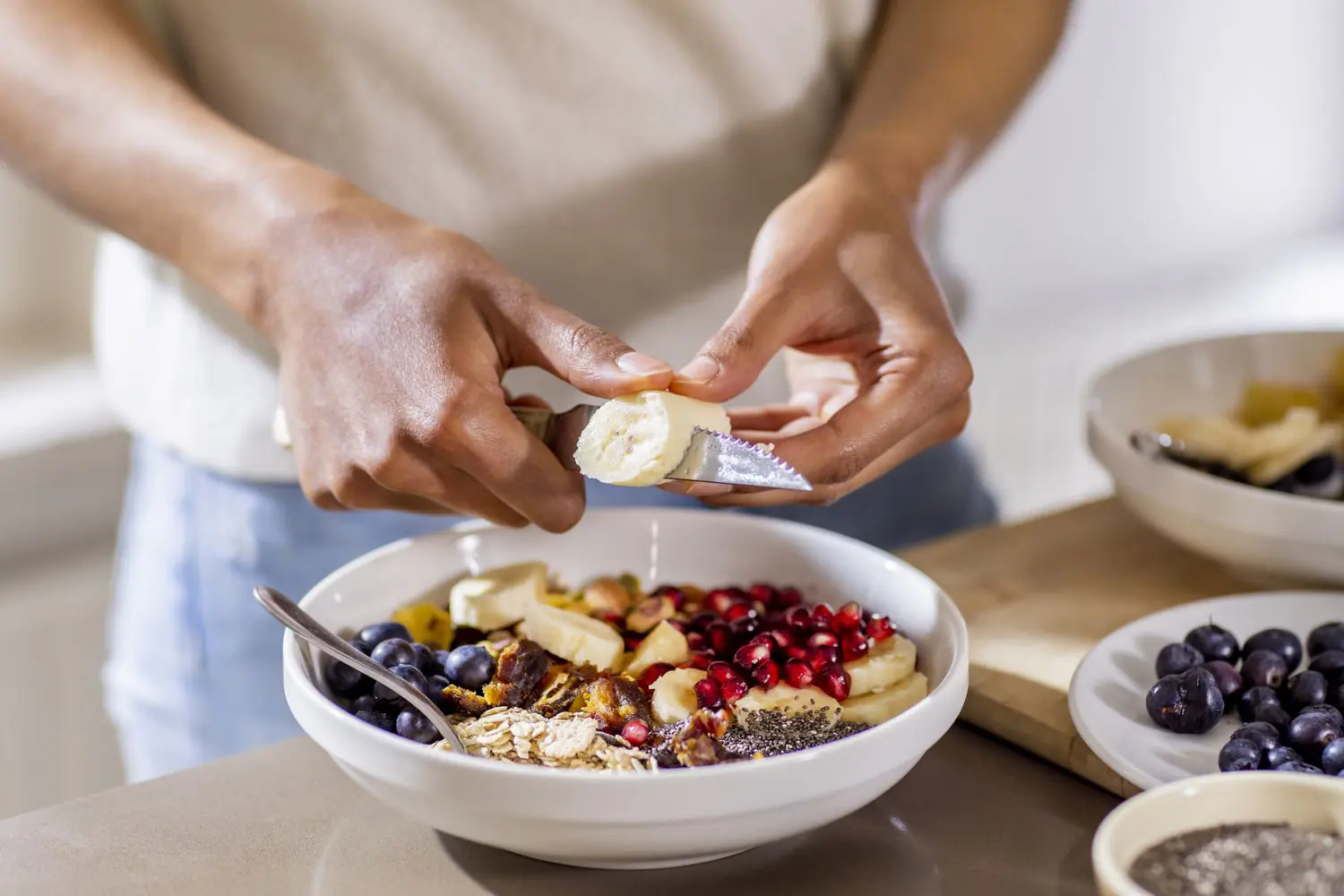
Try oatmeal topped with:
- Banana
- Chia seeds
- Almonds
- Plain yogurt
This creates a more balanced meal than eating a sugary breakfast on its own.
- Fatty Fish
Fatty fish such as salmon, sardines, mackerel and trout are rich in omega-3 fatty acids.
Omega-3 fatty acids are important fats that support overall health.
Some research has investigated omega-3 intake and PMS symptoms, particularly symptoms involving pain and mood. However, evidence isn’t strong enough to suggest that eating fish will eliminate PMS.
Nevertheless, including fatty fish as part of a balanced diet can provide useful nutrients.
Try:
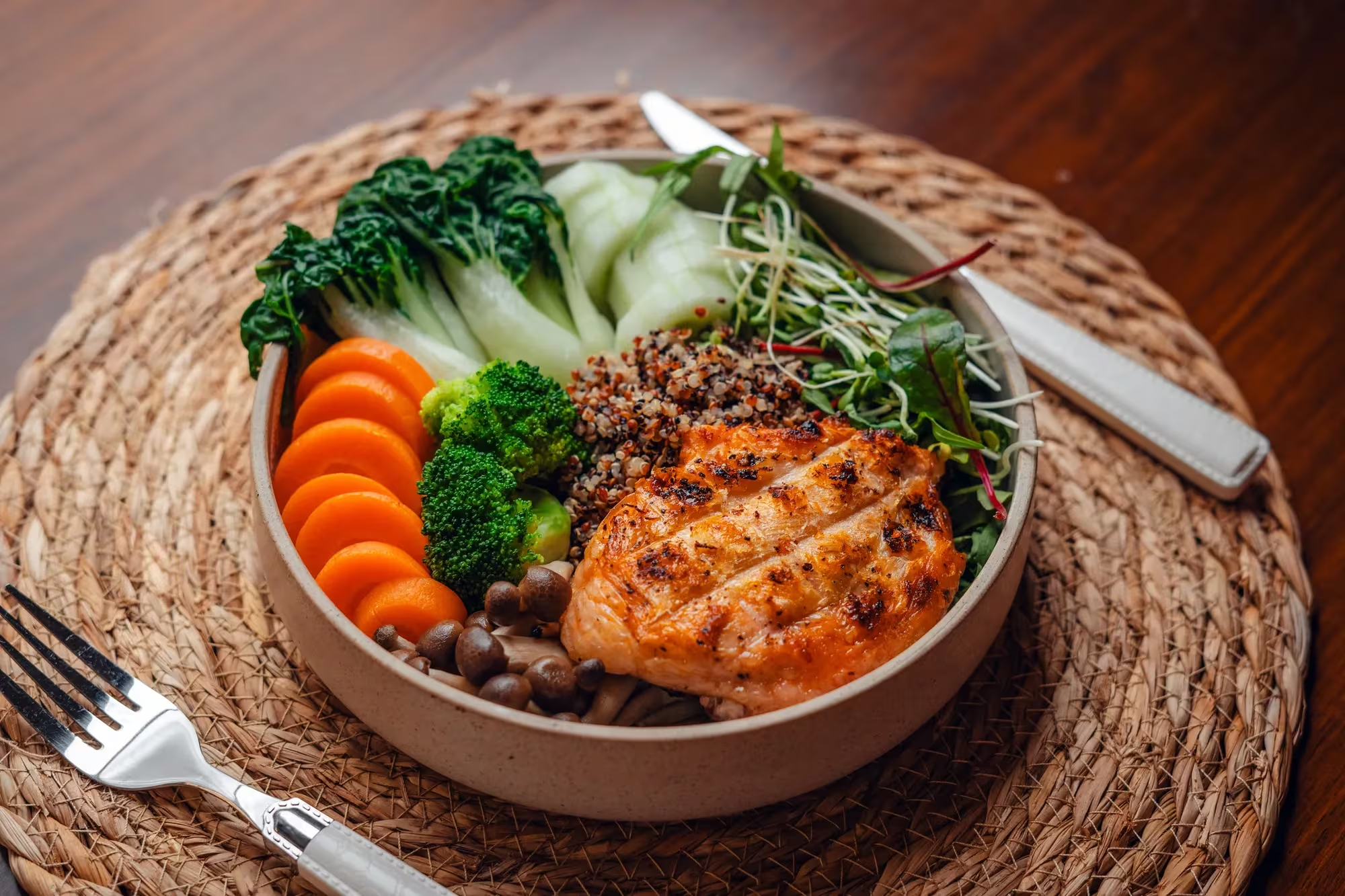
- Grilled salmon with vegetables
- Sardines on whole-grain toast
- Tuna and bean salad
- Baked fish with brown rice
- Nuts and Seeds
Nuts and seeds are nutrient-dense foods that can provide:
- Magnesium
- Healthy fats
- Protein
- Fiber
- Zinc
Good choices include:
- Almonds
- Walnuts
- Pumpkin seeds
- Chia seeds
- Flax seeds
- Sunflower seeds
A small handful makes a convenient snack.
You can also add seeds to oatmeal, yogurt, salads or smoothies.
- Avocado
Avocado contains healthy unsaturated fats along with fiber, potassium and other nutrients.
Its combination of fat and fiber can make meals more satisfying, which may be useful when appetite or food cravings increase before a period.
Try adding avocado to:
- Whole-grain toast
- Eggs
- Salads
- Wraps
- Grain bowls
Again, the goal isn’t to rely on avocado as a PMS remedy. It is simply a nutrient-rich food that can contribute to a balanced diet.
- Eggs
Eggs provide high-quality protein and several vitamins and minerals.
They can be particularly useful for breakfast or snacks because protein can make a meal more satisfying.
Try combining eggs with:
- Whole-grain toast
- Spinach
- Tomatoes
- Avocado
- Other vegetables
A balanced breakfast may help you avoid relying heavily on sugary snacks later in the day.
- Lentils and Beans
Legumes are an excellent source of plant protein and fiber.
Examples include:
- Lentils
- Chickpeas
- Kidney beans
- Black beans
- White beans
They also provide nutrients such as iron, magnesium and fol-ate.
For women who experience fatigue around menstruation, maintaining adequate iron intake is particularly important.
Easy meal
A lentil bowl with brown rice, vegetables, yogurt and a small amount of healthy fat can make a nutritious and filling meal.
- Berries and Other Fruits
Fruits can satisfy sweet cravings while providing fiber, vitamins and naturally occurring plant compounds.
Good options include:
- Strawberries
- Blueberries
- Raspberries
- Oranges
- Apples
- Kiwi
- Pears
Instead of completely avoiding sweet foods when PMS cravings appear, try combining fruit with protein or healthy fats.
For example:
Apple + peanut butter
or
Berries + plain yogurt + nuts
can make a more balanced snack.
- Dark Chocolate in Moderation
Chocolate cravings are common around menstruation.
If you enjoy chocolate, choosing dark chocolate with a higher cocoa content may be preferable to consuming large quantities of highly sugary chocolate products.
Dark chocolate also contains magnesium, although the amount varies by product.
The key is moderation.
A small portion can be enjoyed as part of an otherwise balanced diet.
- Foods Rich in Iron
Iron deserves special attention around menstruation because menstrual bleeding results in iron loss.
Iron-rich foods include:
Animal sources
- Lean red meat
- Chicken
- Fish
- Eggs
Plant sources
- Lentils
- Beans
- Spinach
- Tofu
- Fortified cereals
- Pumpkin seeds
Plant-based iron is absorbed less efficiently than iron from animal sources, but eating vitamin C-rich foods alongside plant sources can improve iron absorption.
For example:
Lentils + tomatoes
or
Spinach + bell peppers
can be useful combinations.
If you experience persistent fatigue, dizziness, shortness of breath or unusually heavy menstrual bleeding, talk to a healthcare professional rather than assuming diet alone is the solution.
- Foods Rich in Magnesium
Magnesium plays a role in muscle and nerve function and is another nutrient commonly discussed in relation to PMS.
Food sources include:
- Pumpkin seeds
- Almonds
- Cashews
- Spinach
- Black beans
- Whole grains
- Avocado
- Dark chocolate
Rather than immediately turning to supplements, try incorporating magnesium-rich foods into your regular meals.
A handful of nuts or seeds, for example, can make an easy snack.
- Foods With Vitamin B6
Vitamin B6 is involved in many processes within the body, including normal nervous-system function.
Foods that contain vitamin B6 include:
- Chickpeas
- Tuna
- Salmon
- Chicken
- Potatoes
- Bananas
- Fortified cereals
Vitamin B6 is sometimes marketed specifically as a PMS supplement, but taking high doses without medical guidance isn’t recommended.
Food-first nutrition is generally the safer starting point.
- Plenty of Water and Hydrating Foods
Although water isn’t technically a food, hydration is an important part of managing how you feel around your period.
Some women experience bloating and changes in fluid balance during PMS.
It may seem logical to drink less water when you’re bloated, but adequate hydration is still important.
You can get fluids from:
- Water
- Milk
- Soups
- Herbal teas
- Fruits
- Vegetables
Try keeping a water bottle nearby throughout the day rather than waiting until you’re very thirsty.
Foods You May Want to Limit During PMS
There isn’t a universal list of foods that every woman must avoid. However, some dietary habits may make certain symptoms more noticeable.
Very salty foods
High-sodium foods may contribute to water retention and bloating in some people.
Examples include:
- Processed snacks
- Instant noodles
- Fast food
- Chips
- Highly processed packaged meals
You don’t have to eliminate salt completely. Instead, focus on moderation and choose minimally processed foods more often.
Excessive caffeine
Some women find that high caffeine intake worsens symptoms such as anxiety, irritability, sleep problems or breast tenderness.
If you notice a connection, consider reducing coffee, energy drinks and other caffeinated beverages around the time symptoms occur.
Excess added sugar
Sugary foods can be tempting during PMS, but eating large amounts of refined carbohydrates may lead to energy fluctuations.
Rather than banning sweets, combine carbohydrates with protein, fiber or healthy fats.
Alcohol
Alcohol can interfere with sleep and may make some PMS symptoms feel worse.
If you’re experiencing significant PMS symptoms, reducing alcohol intake may be worth considering.
A Simple PMS-Friendly Day of Eating
You don’t need a complicated meal plan.
Here’s an example of what a balanced day might look like:
Breakfast
Oatmeal + banana + almonds + plain yogurt
Mid-morning snack
Apple + peanut butter
Lunch
Grilled chicken or lentils + brown rice + spinach + vegetables
Afternoon snack
Berries + yogurt or a handful of nuts
Dinner
Grilled salmon + roasted vegetables + whole grains
Evening
Herbal tea and a small piece of dark chocolate if desired
This type of meal pattern provides a combination of protein, complex carbohydrates, healthy fats, fiber and several important micro nutrients.
Can Food Completely Stop PMS?
No.
PMS has multiple causes and involves hormonal changes that cannot simply be eliminated through diet.
However, nutrition can be one component of symptom management.
Eating regularly, staying hydrated and choosing nutrient-dense foods may help support energy levels and overall well-being.
If PMS symptoms are severe enough to interfere with your daily life, it is important to speak with a healthcare professional.
PMS vs. PM-DD: When to Seek Help
Most people experience some degree of premenstrual symptoms from time to time. But severe symptoms shouldn’t simply be dismissed as “normal PMS.”
Premenstrual dysphoric disorder (PM-DD) is a more severe condition involving significant mood and physical symptoms that can substantially affect daily functioning.
Seek professional help if symptoms such as severe depression, anxiety, anger, hopelessness or emotional distress consistently occur before your period and interfere with your life.
If you experience thoughts of harming yourself or suicide, seek urgent professional help or contact your local emergency service immediately.
Frequently Asked Questions About Foods for PMS
What are the best foods to eat before your period?
Foods containing calcium, magnesium, iron, vitamin B6, fiber, protein and healthy fats can be useful additions to a balanced diet. Examples include leafy greens, yogurt, oats, nuts, seeds, legumes, eggs, fruit and fatty fish.
What foods help with period cramps?
There isn’t one food that reliably eliminates menstrual cramps. A balanced diet containing omega-3-rich fish, magnesium-rich foods, fruits, vegetables and whole grains may support overall menstrual health.
Are bananas good for PMS?
Bananas provide potassium, vitamin B6 and carbohydrates, making them a nutritious snack. They can be part of a balanced diet during PMS but should not be considered a treatment for PMS.
Should I avoid sugar during PMS?
You don’t necessarily need to eliminate sugar completely. However, limiting large amounts of added sugar and choosing meals containing protein, fiber and complex carbohydrates may help support more consistent energy.
What should I drink during PMS?
Additionally, water is a good primary choice. Milk and other nutritious beverages can also contribute to hydration. Some people prefer caffeine-free herbal teas, particularly if caffeine makes their symptoms worse.
Can diet reduce PMS bloating?
Some people find that reducing very salty foods and maintaining adequate hydration helps with bloating. Eating fiber-rich foods may also support regular bowel movements, although suddenly increasing fiber can sometimes cause more bloating.
Final Thoughts
The foods that may help ease PMS symptoms aren’t exotic or difficult to find.
A balanced diet built around vegetables, fruits, whole grains, legumes, nuts, seeds, protein-rich foods and healthy fats can provide many of the nutrients your body needs throughout the menstrual cycle.
Pay particular attention to foods containing calcium, magnesium, iron, vitamin B6 and omega-3 fatty acids, while also staying adequately hydrated.
At the same time, remember that every body is different. A food that makes one person feel better may not have the same effect on someone else.
Rather than following a restrictive “period diet,” focus on consistent, nourishing eating habits throughout the month.
And if PMS symptoms are severe, persistent or interfering with your everyday life, don’t rely on food alone. A healthcare professional can help determine whether PMS, PM-DD or another condition may be contributing to your symptoms.
Good nutrition isn’t about finding one perfect food. It’s about giving your body the nutrients and care it needs—throughout the entire menstrual cycle.